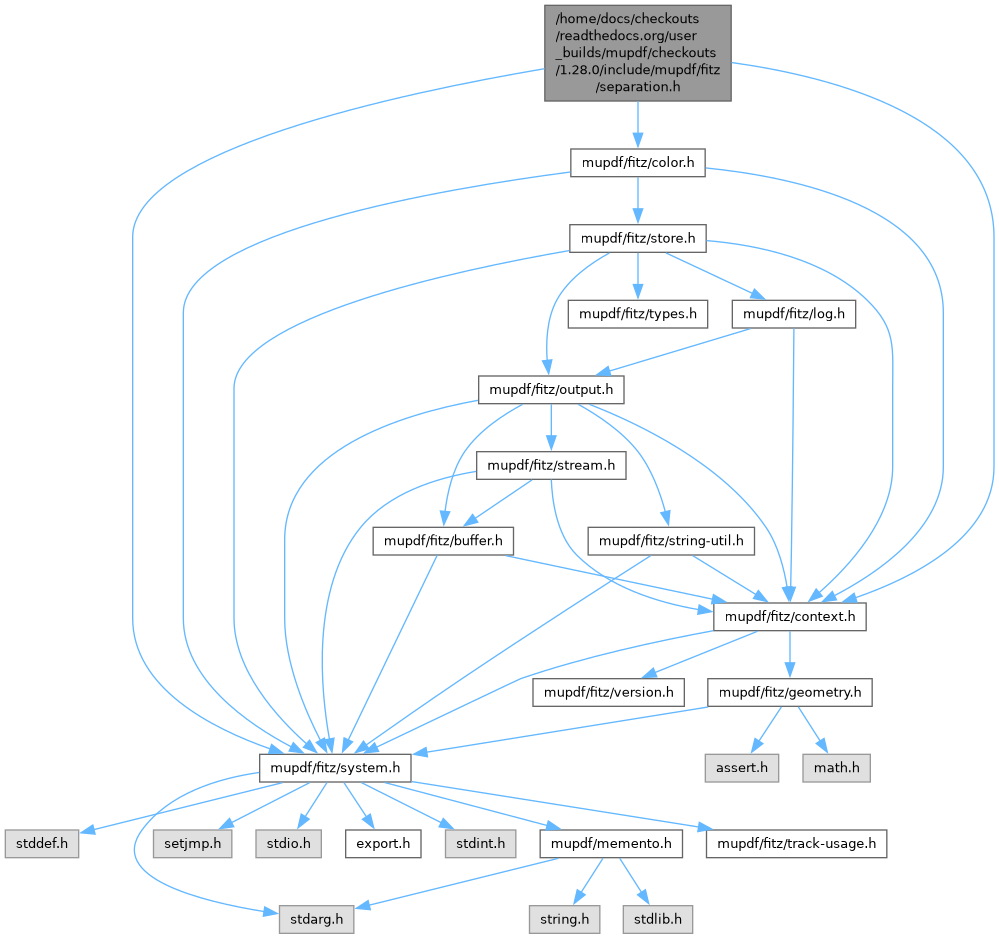
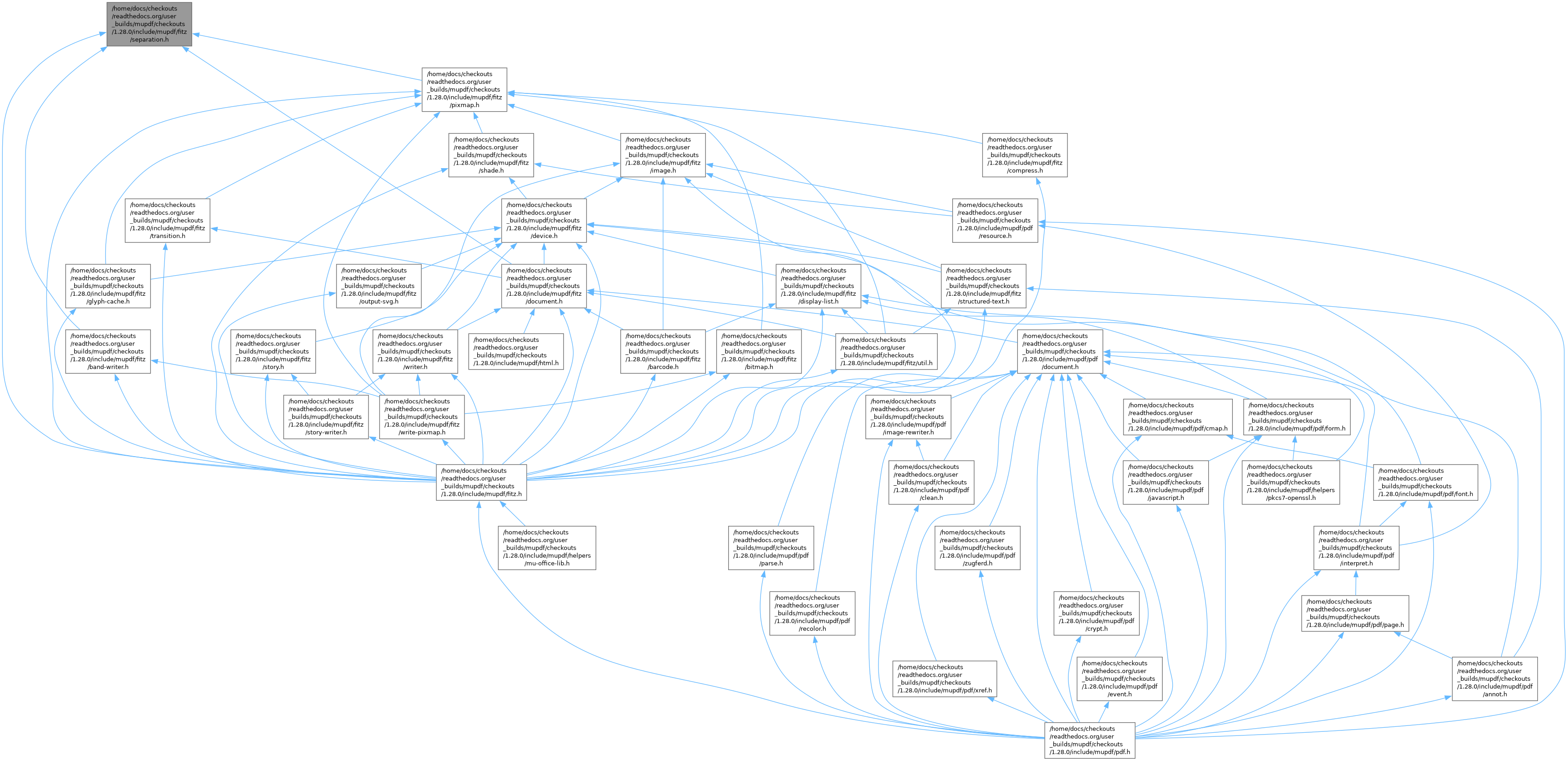
Go to the source code of this file.
|
| fz_separations * | fz_new_separations (fz_context *ctx, int controllable) |
| fz_separations * | fz_keep_separations (fz_context *ctx, fz_separations *sep) |
| void | fz_drop_separations (fz_context *ctx, fz_separations *sep) |
| void | fz_add_separation (fz_context *ctx, fz_separations *sep, const char *name, fz_colorspace *cs, int cs_channel) |
| void | fz_add_separation_equivalents (fz_context *ctx, fz_separations *sep, uint32_t rgba, uint32_t cmyk, const char *name) |
| void | fz_set_separation_behavior (fz_context *ctx, fz_separations *sep, int separation, fz_separation_behavior behavior) |
| fz_separation_behavior | fz_separation_current_behavior (fz_context *ctx, const fz_separations *sep, int separation) |
| const char * | fz_separation_name (fz_context *ctx, const fz_separations *sep, int separation) |
| int | fz_count_separations (fz_context *ctx, const fz_separations *sep) |
| int | fz_count_active_separations (fz_context *ctx, const fz_separations *seps) |
| int | fz_compare_separations (fz_context *ctx, const fz_separations *sep1, const fz_separations *sep2) |
| fz_separations * | fz_clone_separations_for_overprint (fz_context *ctx, fz_separations *seps) |
| void | fz_convert_separation_colors (fz_context *ctx, fz_colorspace *src_cs, const float *src_color, fz_separations *dst_seps, fz_colorspace *dst_cs, float *dst_color, fz_color_params color_params) |
| void | fz_separation_equivalent (fz_context *ctx, const fz_separations *seps, int idx, fz_colorspace *dst_cs, float *dst_color, fz_colorspace *prf, fz_color_params color_params) |
◆ fz_separations
◆ anonymous enum
A fz_separation structure holds details of a set of separations (such as might be used on within a page of the document).
The app might control the separations by enabling/disabling them, and subsequent renders would take this into account.
| Enumerator |
|---|
| FZ_MAX_SEPARATIONS | |
◆ fz_separation_behavior
| Enumerator |
|---|
| FZ_SEPARATION_COMPOSITE | |
| FZ_SEPARATION_SPOT | |
| FZ_SEPARATION_DISABLED | |
◆ fz_add_separation()
Add a separation (null terminated name, colorspace)
◆ fz_add_separation_equivalents()
| void fz_add_separation_equivalents |
( |
fz_context * | ctx, |
|
|
fz_separations * | sep, |
|
|
uint32_t | rgba, |
|
|
uint32_t | cmyk, |
|
|
const char * | name ) |
Add a separation with equivalents (null terminated name, colorspace)
(old, deprecated)
◆ fz_clone_separations_for_overprint()
Return a separations object with all the spots in the input separations object that are set to composite, reset to be enabled. If there ARE no spots in the object, this returns NULL. If the object already has all its spots enabled, then just returns another handle on the same object.
◆ fz_compare_separations()
Compare 2 separations structures (or NULLs).
Return 0 if identical, non-zero if not identical.
◆ fz_convert_separation_colors()
Convert a color given in terms of one colorspace, to a color in terms of another colorspace/separations.
◆ fz_count_active_separations()
Return the number of active separations.
◆ fz_count_separations()
◆ fz_drop_separations()
Decrement the reference count for a separations structure. When the reference count hits zero, the separations structure is freed.
Never throws exceptions.
◆ fz_keep_separations()
Increment the reference count for a separations structure. Returns the same pointer.
Never throws exceptions.
◆ fz_new_separations()
Create a new separations structure (initially empty)
◆ fz_separation_current_behavior()
Test for the current behavior of a separation.
◆ fz_separation_equivalent()
Get the equivalent separation color in a given colorspace.
◆ fz_separation_name()
◆ fz_set_separation_behavior()
Control the rendering of a given separation.